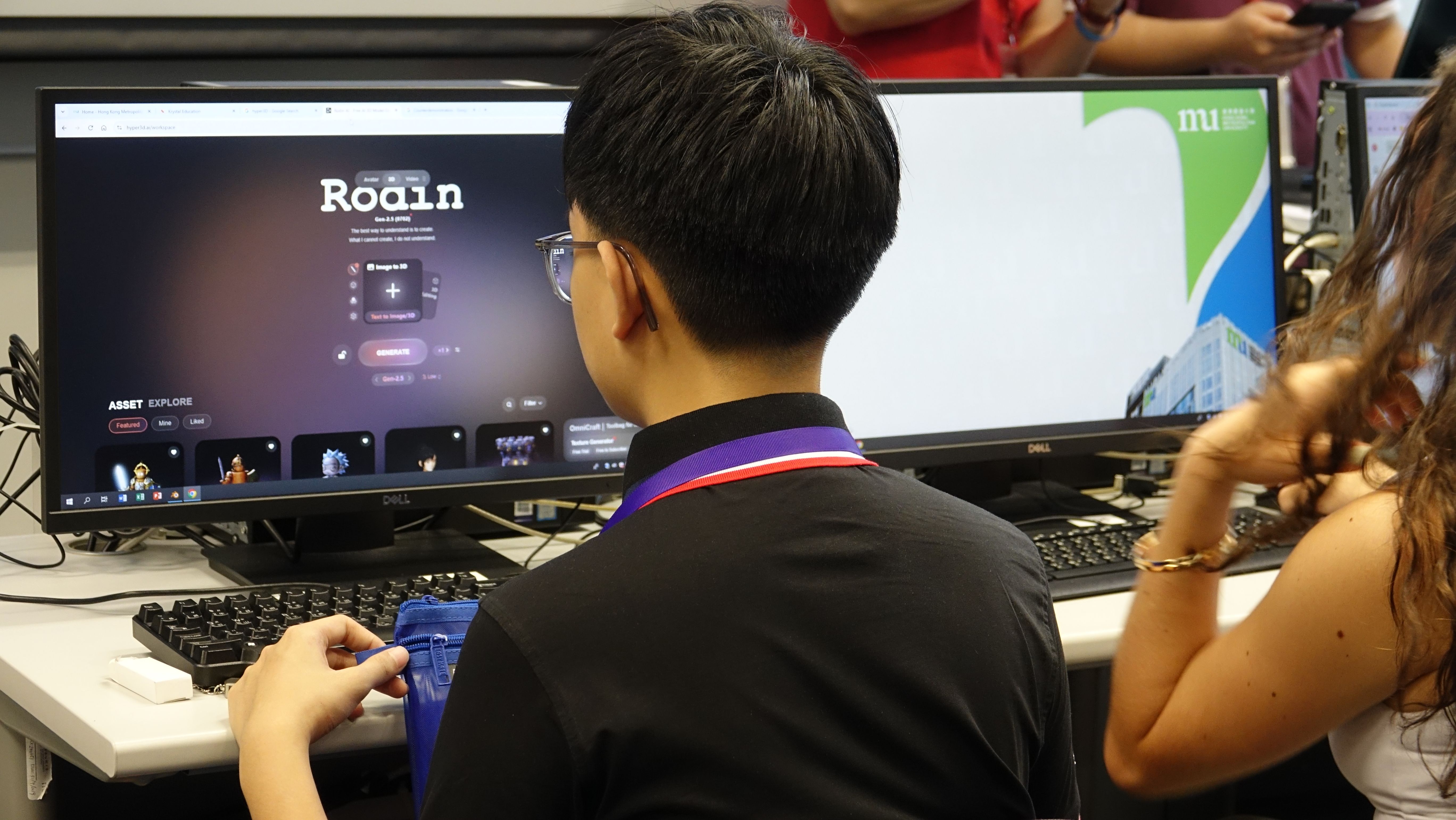
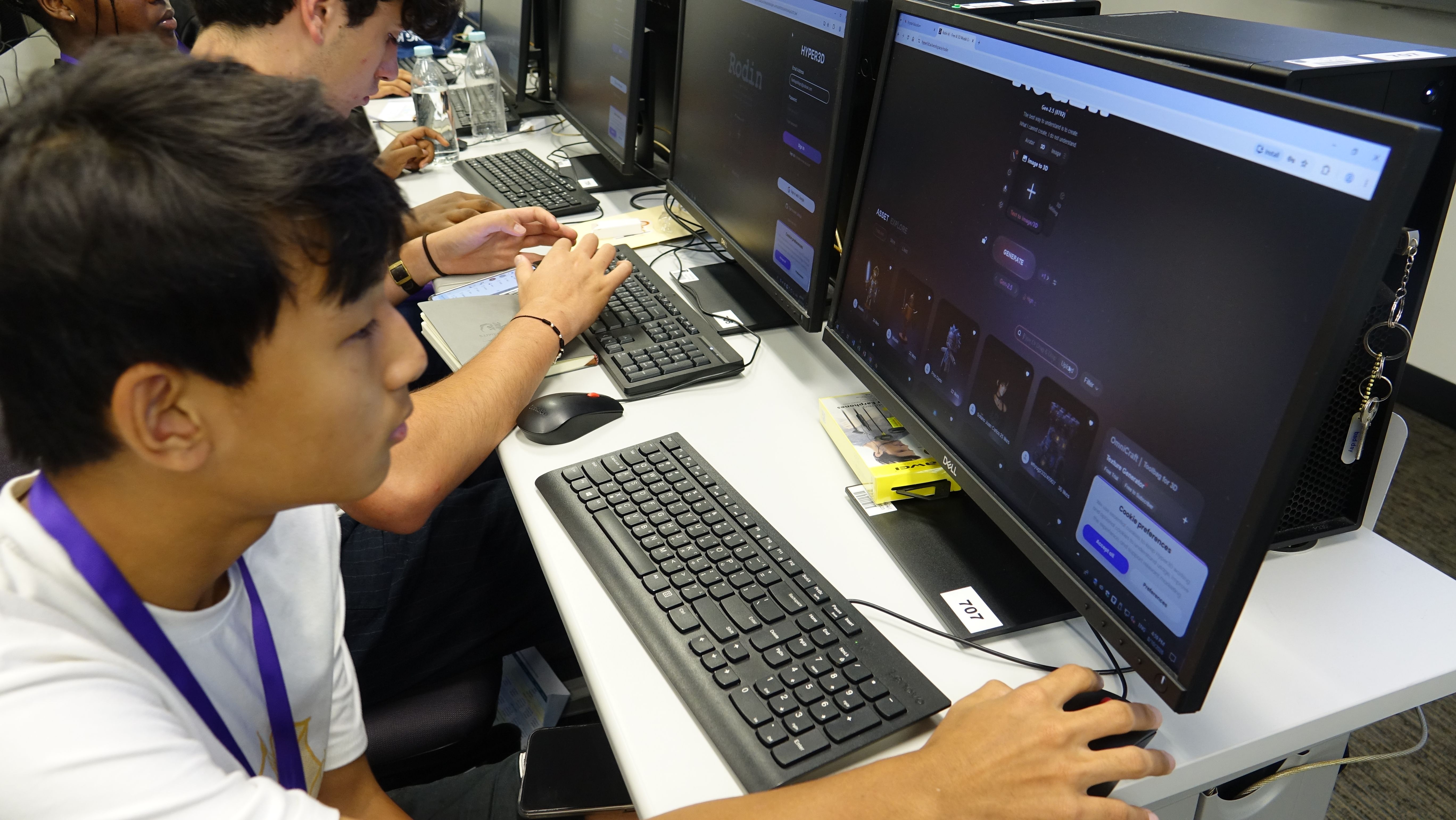
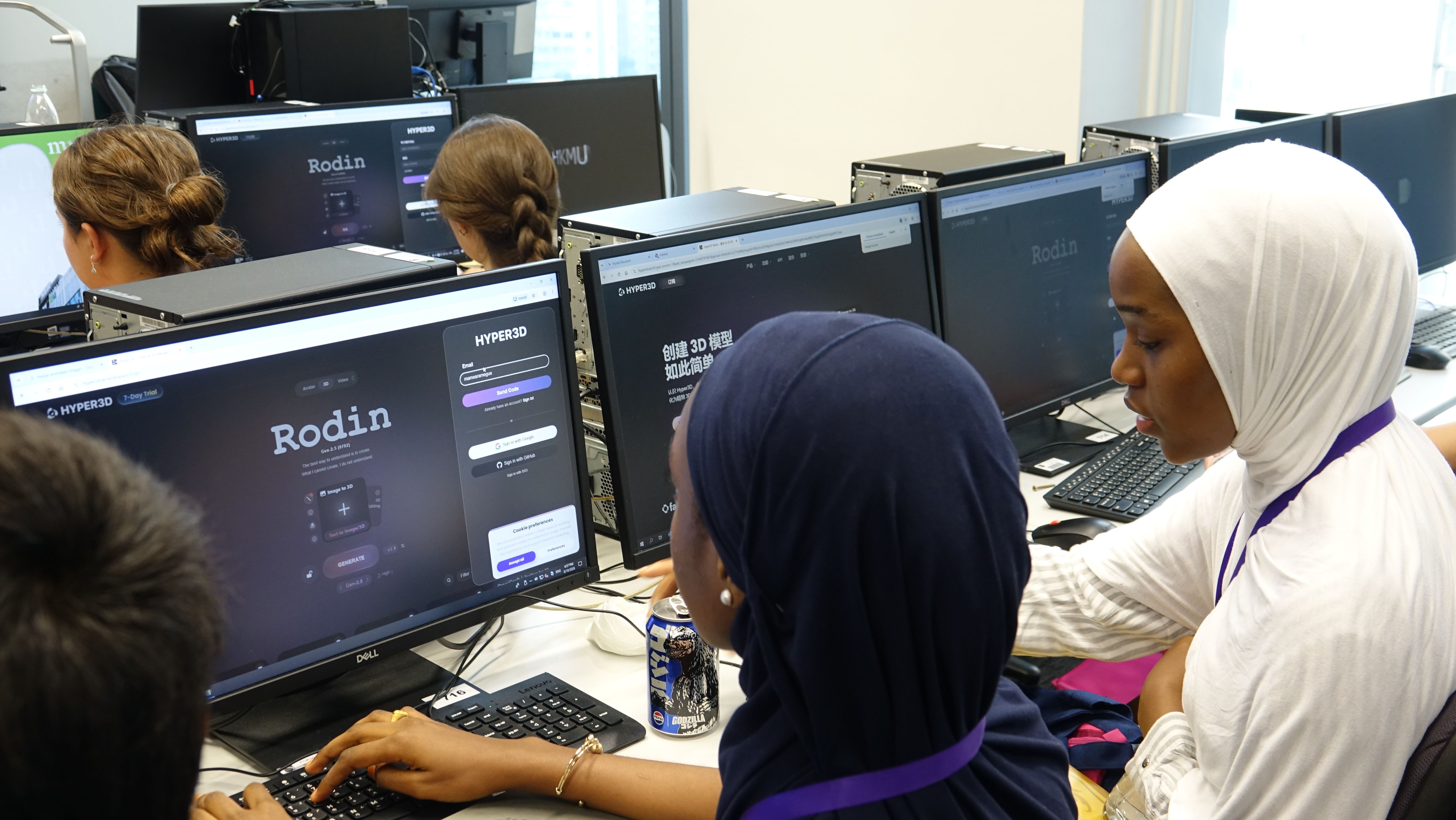
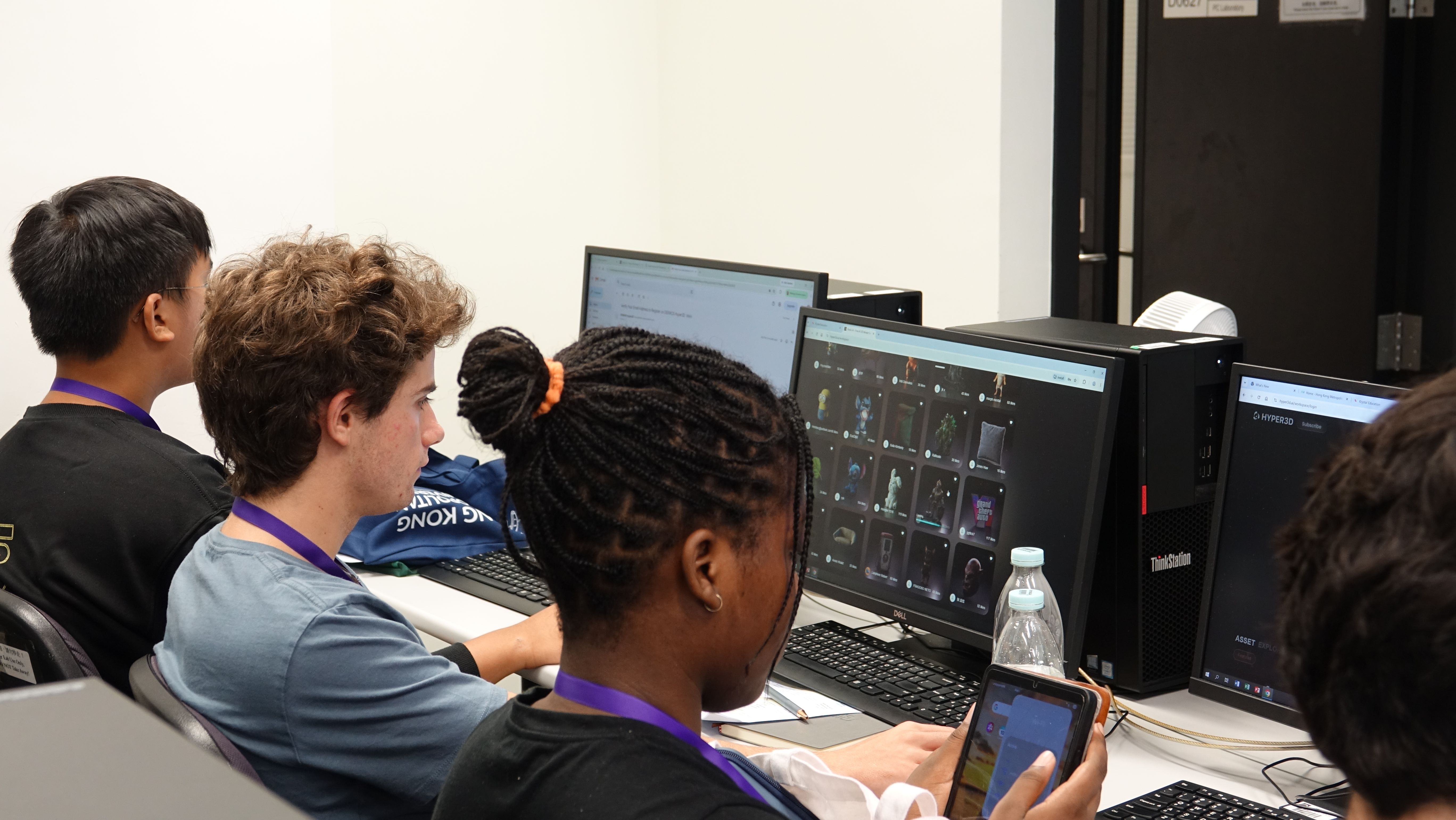
September 4, at the recently concluded "Future Creators AI × Blender International Creative Summer Camp," more than 20 secondary school students from Mexico, Senegal, local Hong Kong, and other regions built their own 3D works and AI animated videos from scratch in just five days. The ability of students to complete high-quality works in such a short period was not only due to the expert guidance of international tutors, but also benefited from the deep collaboration between Krystal Institute and Hyper3D. By integrating the Hyper3D Rodin AI 3D asset generation tool into their creative workflow, students significantly enhanced both creative efficiency and artwork quality.
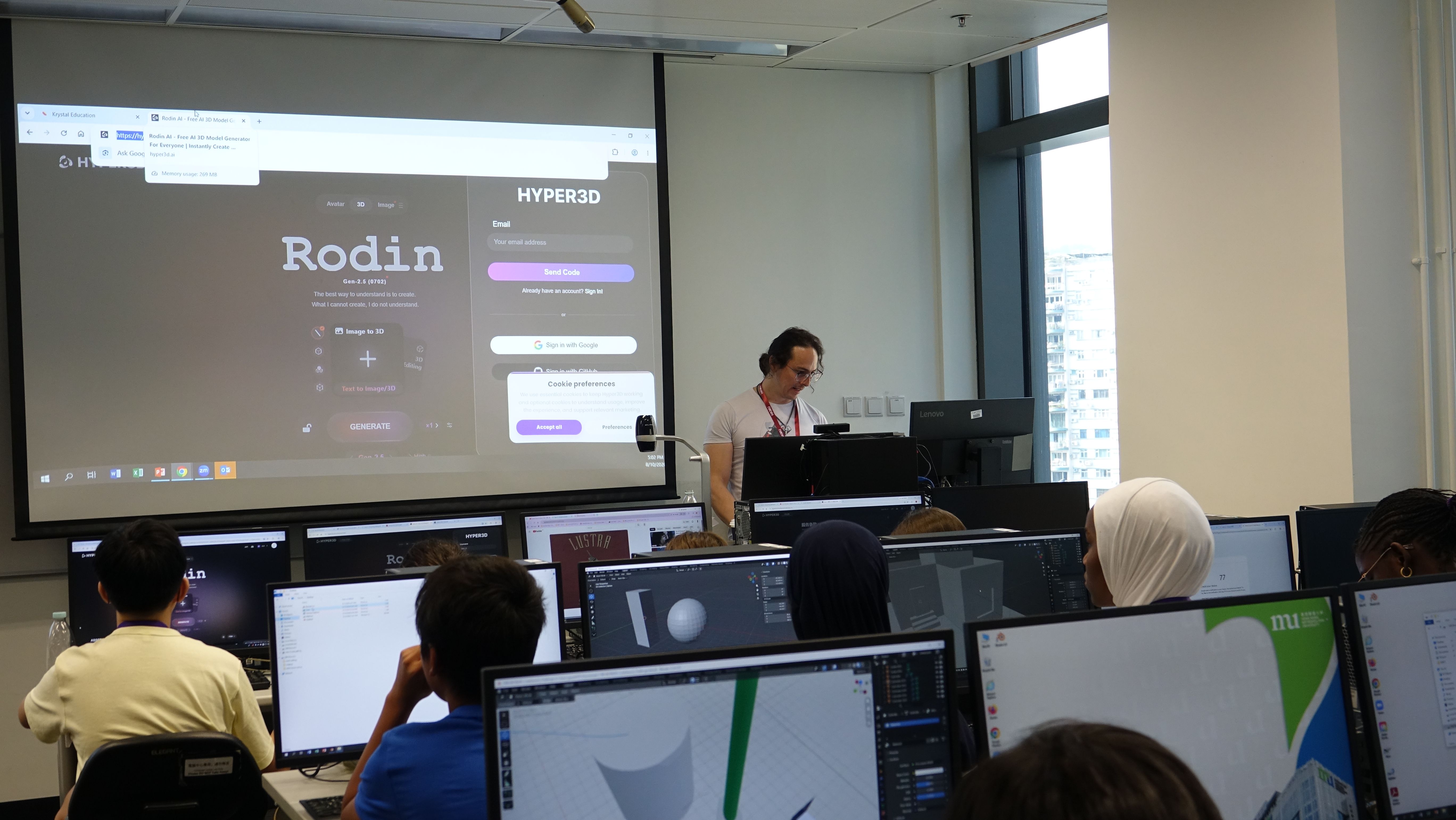
Rodin AI: A Creative Accelerator from Text/Image to 3D Models
Hyper3D Rodin is a production-grade 3D generative AI model capable of directly generating high-quality 3D models with materials and textures based on text prompts or reference images. Its latest-generation model, Rodin Gen-2.5, introduces the LLM-like logic of "think first, generate later" into the 3D generation domain. With customizable generation times ranging from 4 to 80 seconds, it meets diverse scenario demands from rapid drafting to fine modeling.
More importantly, Rodin can seamlessly integrate into industry-standard software workflows such as Blender. While performing modeling and visual optimization in Blender, students can quickly generate needed 3D assets via Rodin at any time. This eliminates a vast amount of time spent on modeling from scratch, allowing them to focus their energy on creative ideation and refining their work.
Smoother Creation, Comprehensive Enhancement of Work Quality
The curriculum design of this summer camp covered a complete creative workflow—from inspiration ideation, basic Blender operations, and visual optimization to AI video generation. The introduction of Rodin AI enabled students to advance more efficiently at every stage:
- Proof-of-Concept Stage: Students can quickly generate 3D prototypes through text or sketches to instantly verify the feasibility of their ideas;
- Modeling Stage: Rodin generates models adhering to industry topology and detail standards, which can be directly used for subsequent editing and rendering;
- Iterative Optimization: It supports natural language to modify models directly, enabling semantic-level editing without needing complete reconstruction.
This AI-assisted creation model allowed beginners with zero background to complete full original works within five days and reach a professional standard capable of entering international creative competitions.
Co-Creating a New Ecosystem for Digital Creative Education
Krystal Institute has always been committed to driving digital creative technology and educational innovation. This collaboration with Hyper3D represents an important practical step in introducing cutting-edge AI 3D generation technology into youth creative education. Through the seamless synergy between Rodin and Blender, students experienced a professional-grade 3D creative process, laying a solid foundation for standing on the international stage in the future.
With the successful conclusion of the summer camp, Krystal Institute will continue to deepen its collaboration with technology partners such as Hyper3D to provide more young creators with efficient, professional creative tools and learning platforms, ensuring that imagination is no longer constrained by technical barriers.
About Hyper3D Rodin
Hyper3D Rodin is a world-leading 3D generative AI model developed by Deemos Tech, positioned as a high-quality, controllable, production-grade 3D asset generation tool tailored for real industrial workflows. Its products have been widely applied in game development, virtual reality, industrial design, and other fields, and were showcased by NVIDIA CEO Jensen Huang during his CES keynote speech.
About Krystal Institute
Krystal Institute engages in teaching, research, training, and certification to empower the people, provide upward mobility, and bridge the global digital divide. We deliver essential knowledge for excellence in the digital economy. We prepare students to fully utilize their knowledge, skills, and tools in the digital economy by fostering their creativity and providing open-source technologies. Our Founders have decades of experience collaborating with educational institutions worldwide, such as Nanyang Technological University, Shenzhen University, and City University of Hong Kong. Founder Raymond Neoh produced China's first 3D CG animated feature film, Thru the Moebius Strip (2004). To date, the Institute of Digital Game Technology and Institute of Digital Media Technology have trained close to 10,000 media professionals for China's digital content creation industry.
In Hong Kong, we collaborate with training and industry partners to offer courses in over 40 different areas within the Digital Economy Core Technology (DECT) framework. We have established academic collaborations with the Chinese University of Hong Kong, the University of Hong Kong, and the Hong Kong Polytechnic University, driving our research and development.
Media Contact
• Email: info@krystal.institute
• Phone: (852) 9510 0364